Virtual Keynote Speakers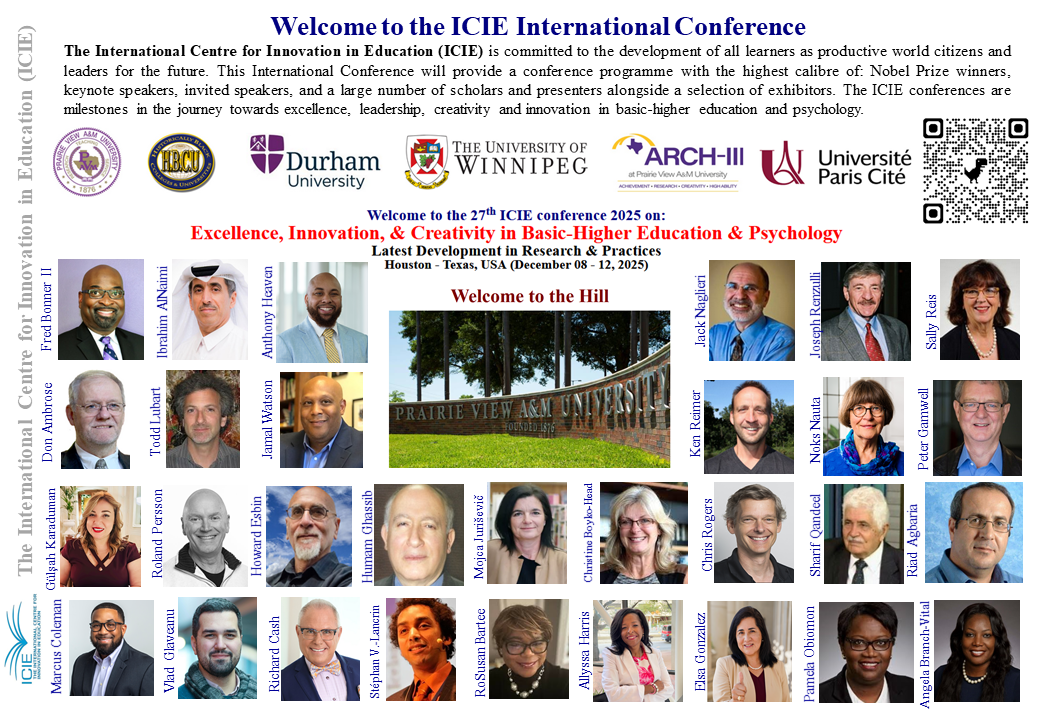
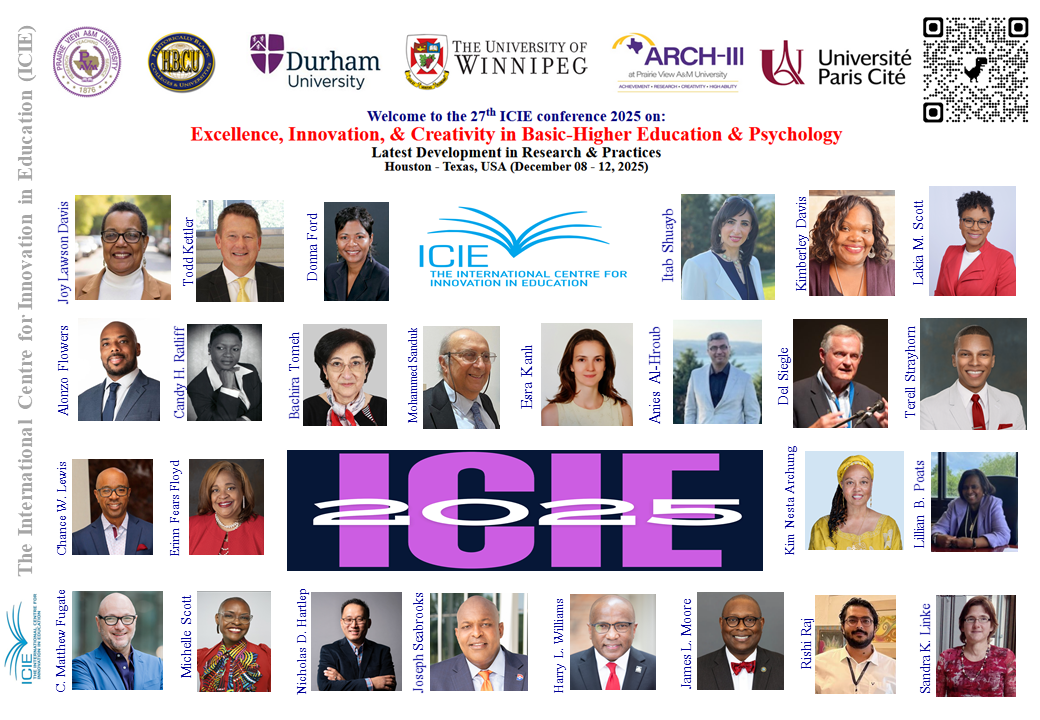
We are honored to welcome a distinguished lineup of keynote and invited speakers who are leaders in their fields and pioneers in innovation education, research, excellence, creativity, gifted education, and other categories. Their expertise and insights will provide valuable perspectives and inspire engaging discussions throughout this international conference (Houston, Texas, 8-12 December, 2025).
Dec 8, Monday opening reception address
- In-person Dean RoSusan Bartee PVAMU Education
Dec 9, Tuesday virtual keynotes
- Chance Lewis
- Lakia Scott
- Alonzo Flowers
- Harry Williams
- Michelle FT Scott
- In-person Dean Allyssa Harris PVAMU Nursing
Dec 10, Wednesday virtual keynotes
- Kimberley Davis
- Erinn Floyd
- Terell Strayhorn
- Anthony Heaven
- Joy Lawson Davis
- In-person Assistant Provost Elsa Gonzalez TAMU Strategic Partnerships
Dec 11, Thursday virtual keynotes
- Joe Seabrooks
- Candy Ratliff
- Kim Archung
- Todd Kettler
- Marcus Coleman
- In-person Dean Pamela Obiomon PVAMU Engineering
Dec 12, Friday virtual keynotes
- James Moore
- C. Matthew Fugate
- Donna Ford
- Jamal Watson
- Nicholas Hartlep
In-person Dean Angela Branch-Vital PVAMU Public Health
Community and Higher Education Institutional Change
Sydney Freeman, Jr.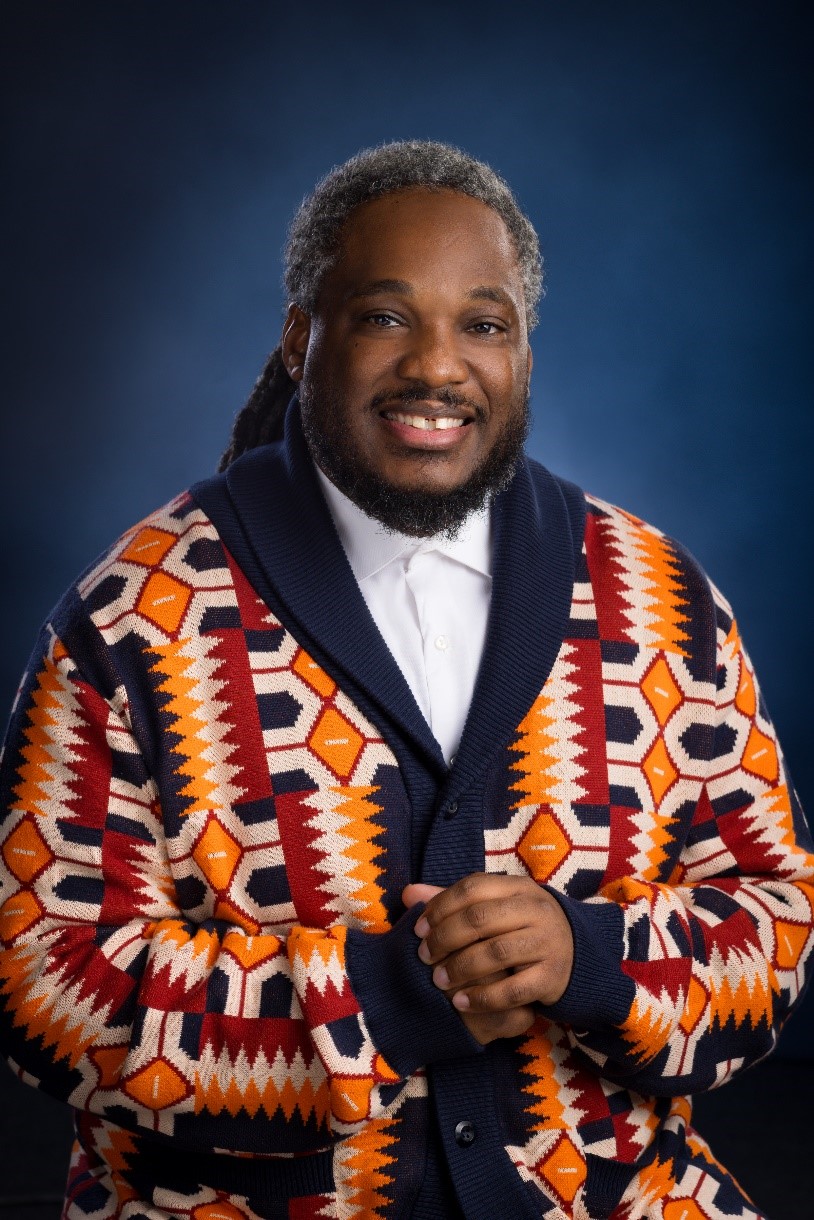
Leadership and Counseling Department, University of Idaho, USA
In a speech I gave in 2023 at an awards ceremony at the Idaho State Museum in the United States, I asked the crowd, “What would you be doing if you were living during the civil rights movement?” To that point I said we are living in a new civil rights era! In the United States there are many human rights situations effecting people of African descent including mass incarceration, lack of access to high quality healthcare and education, high infant mortality rates, police brutality, and more. People of African descent are near the bottom of every category related to social mobility indexes. The American society often looks to leadership in higher education to help solve many of these intractable issues. Whether it be through preparing future leaders in the classroom, research, or outreach initiatives. Utilizing autoethnography as the research approach in this presentation, I will share the racial justice strategies I have refined over nearly a decade. I have successfully been able to serve as a change agent and social justice entrepreneur in a state whose population is nearly 90% white. Social Justice Entrepreneurs are individuals who use their skills, resources, influence, and power to address and solve various social issues such as anti-Black racism. Findings from this study reveal five steps that lead to becoming a higher education social justice entrepreneur which are decolonization, abolition, revolution, liberation, and sovereignty. Those interested in community and higher education institutional change will benefit from attending this presentation.
The Economic Impact of Rural Education: A Case Study on Liberia, West Africa
George Toto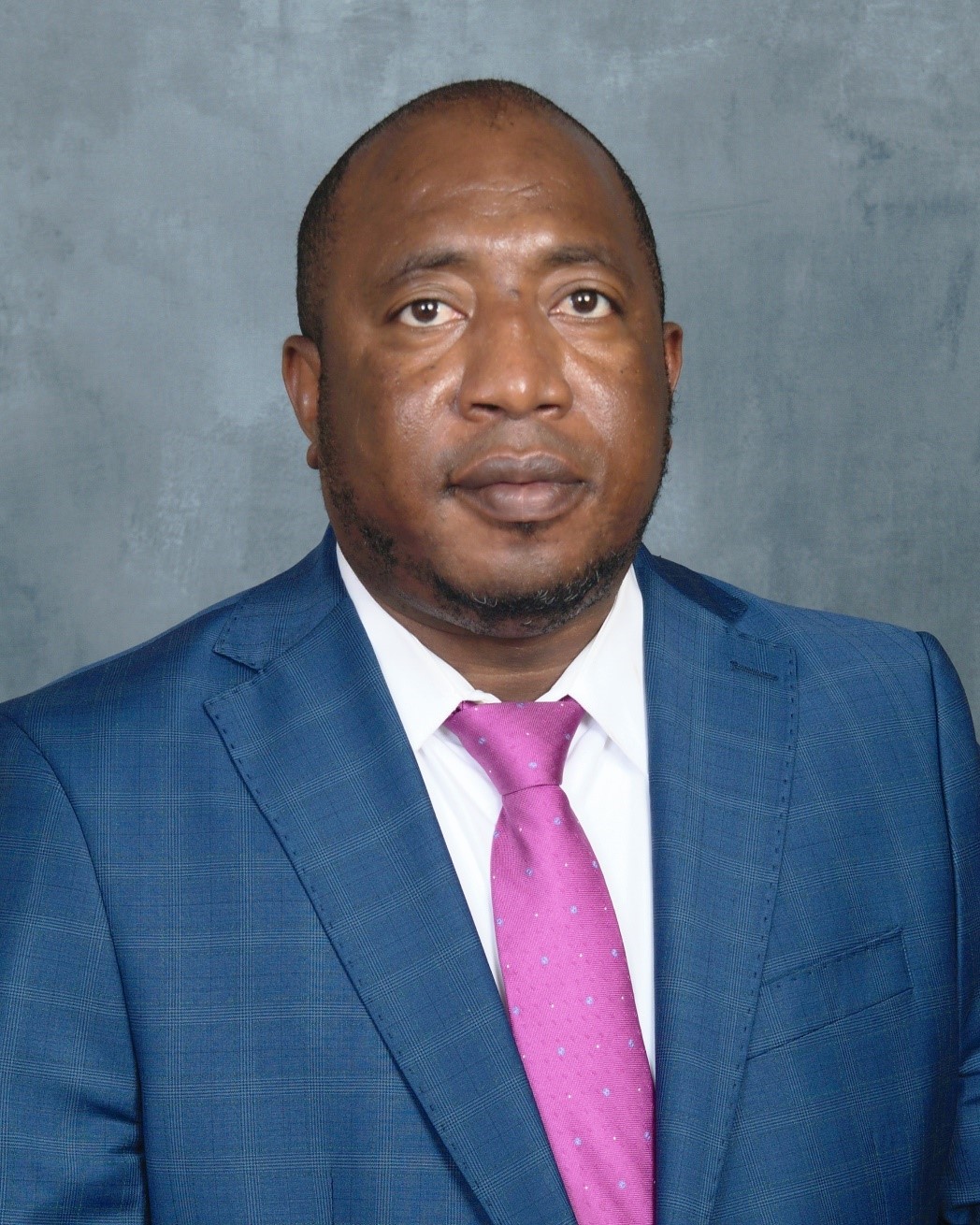
Quelmin Toto Rural Education Foundation
This research will investigate the economic impact of rural education in Liberia, a West African country that is managing serious educational and social challenges. Through this work, the economic determinants of educational access, quality and success in rural Liberian communities will be explored. It will study the way economic conditions, such as the income of students, the number of employment opportunities, and government funding, affect educational infrastructure and resources (Ahn et al., 2019). The research will also look at how NGOs and foreign aid complement government efforts to ensure quality education for children. It is common to see vast differences in educational attainment, particularly in rural areas, due to limited access to schools, qualified teachers, and teaching materials. The gap widens further, whereby economic hardships like widespread poverty and the aftermath of civil conflict caused education to be totally underfunded and understaffed. The research will take a mixed-method approach, involving both qualitative data from government reports and educational statistics, as well as qualitative data through interviews and focus groups with teachers, students, and community leaders (A. Babs Fafunwa & Aisiku, 2022). Through grasping the interaction of the economic aspects and educational outcomes, this study hopes to recognize the tools that can be used to increase accessibility and the quality of education in rural Liberia. Directional economic policies, rural education funding, and community involvement in education courses are needed (Kumeh et al., 2020). The study will contribute to the education conversation in developing nations and policy recommendations for closing Liberia's rural-urban educational gaps. This research guides politicians, educators, and development practitioners who want to create inclusive and equitable education systems in rural Liberia and other West African countries. The long-term aim is to emphasize the role of the economy in investment in education as a means to achieve sustainable development and poverty reduction in rural areas.
Thriving Beyond Barriers: The Experiences of Underrepresented Fundraisers
Anthony L. Heaven
IU-Indianapolis (The Lilly Family School of Philanthropy), USA
Across the U.S., higher education institutions and other organizations face growing competition for philanthropic resources as government funding declines. In this environment, the role of professional fundraisers is critical. At the same time, as the nation becomes increasingly diverse and communities of color continue to demonstrate strong philanthropic engagement, it is essential that the fundraising profession reflects this diversity. Representation alone, however, is not enough. The sector must also create environments that support and empower fundraisers from underrepresented backgrounds to thrive despite the persistent challenges of racism, sexism, and classism within the field.
This keynote will explore the lived experiences of racially underrepresented professionals including how they define success, interpret their roles, and navigate today’s socio-political realities. Drawing on findings from a recent research study, the session will illuminate key challenges and opportunities, offering practical implications for institutions committed to fostering justice in philanthropy.
Do You See What I See? Understanding and Embracing Equity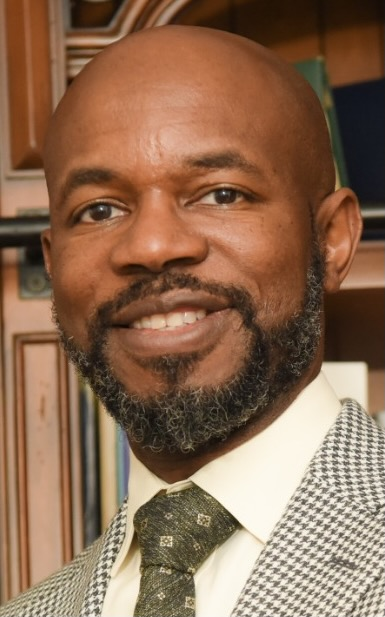
Mark Anthony Gooden
Teachers College, Columbia University, USA
During this keynote, Dr. Gooden will provide an introduction to the multiple levels of inequity and explain how they undermine the work of effective leaders and hinder the goal of reforming schools. There will also be a presentation of a framework that facilitates seeing equity clearly, and thus engaging in equity-centered leadership using the 5 Practices for Equity Focused School Leadership.
Framing Sense of Belonging as an ‘Ill-Structured Challenge’ for Future Higher Education: A Global Perspective
Terrell Lamont Strayhorn
Center for the Study of HBCUs, Virginia Union University, USA
In this invited keynote address, Dr. Terrell Strayhorn, one of the world’s leading experts on diversity and student success, will provide a global perspective on the critical challenge of fostering a strong sense of belonging among students in higher education. It will explore how a heightened sense of belonging can catalyze creativity, innovation, and excellence in the academic experience, as documented in his consequential books on the topic. Drawing insights from diverse international contexts and his ground-breaking research studies, Professor Strayhorn will frame belonging as a formidable challenge threatening higher education’s future, identify the benefits and consequences that may lie ahead, and outline evidence-based strategies and innovative approaches that universities can implement to cultivate a thriving, inclusive learning environment that empowers students to reach their full potential. By showcasing innovative practices from leading institutions worldwide, the keynote will inspire attendees to reimagine the future of higher education and empower students to feel a true sense of belonging in an increasingly connected global landscape.
Educating Innovators: How to Teach for Talent Development
Jeanne L. Paynter
Baltimore, Maryland, USA
Our schools today have a talent development crisis. Even the best aren’t producing the creative problem solvers needed in this competitive global economy. A focus on standardized testing for accountability has narrowed the curriculum and left our students unmotivated, disengaged, and underachieving. The greatest crisis is among poor and minority students who lack equitable opportunities to discover and develop their talents. This presentation demonstrates a sound new approach for educating innovators, students prepared to apply their unique talents to create new ideas, processes and products to improve our world. In the Talent-Targeted Teaching Model, the purpose for learning shifts from short-term content and skill acquisition to long-term aims for developing the 12 aptitudes of innovators; cognitive and “soft skills” such as creativity, insight, persistence, logical reasoning, empathy, and metacognition. Educators learn how to transform their required content standards into long-term talent development goals which motivate students as they self-assess and document their progress on a continuum. Using the Design for Innovation essential strategies, teachers can create authentic product-based learning to engage students in deep understanding while developing the aptitudes of innovators. Talent-Targeted Teaching and Learning applies the psychology of motivation, engagement, and achievement in practical tools that educators can use to focus on talent development. The Talent-Targeted Teaching model can be used with gifted students to extend and refine their talents, with grade-level students to support growth, and with at-risk students to discover and develop emerging talents.
Dr. Jeanne L. Paynter
192 Oakdale Road; Baltimore, Maryland 21210, USA
e-Mail: This email address is being protected from spambots. You need JavaScript enabled to view it.
Creativity Beyond Boundaries: Innovative Techniques for Differentiated Instruction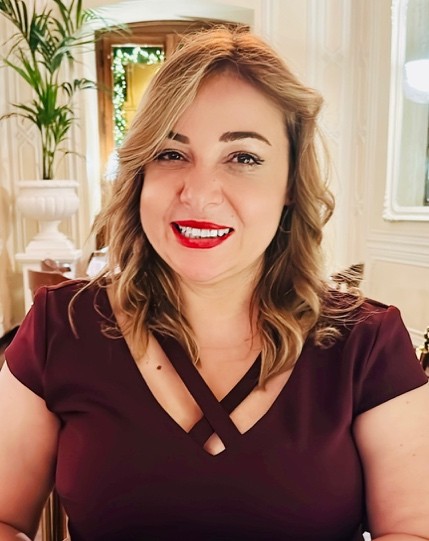
Gülşah Batdal Karaduman
Istanbul University-Cerrahpasa, Istanbul, Turkey
Creativity is the skill of generating fresh and purposeful ideas or alternatives that support flexible thinking, deepen understanding, and enable individuals to express themselves and solve problems in diverse contexts. This keynote reframes creativity as a deliberate, teachable meta-skill that functions as a powerful framework for differentiated instruction in both gifted and mixed-ability classrooms. Drawing on evidence-based strategies, the session highlights how creative thinking can support diverse learners through flexible, tiered, and inclusive instructional design. Three core components—flexibility, originality, and elaboration—are presented as mechanisms for responding to student readiness, promoting deep inquiry, and expanding cognitive challenge. Practical examples from mathematics, science, and interdisciplinary settings illustrate how structured creativity techniques can simultaneously enhance the learning experiences of high-ability students and scaffold engagement for all learners. By positioning creativity as a transformative pedagogical tool, this presentation demonstrates its potential to broaden academic pathways, foster innovation, and strengthen differentiated teaching practices across educational contexts.
ADHD: Disorder or Gift? 
Ken and Andrea McCluskey
University of Winnipeg, Canada
As the term itself indicates, ADHD is typically viewed as a "disorder." And certainly, hyperactive and inattentive children present some interesting challenges at home, at school, and in the community. This session highlights many of the problems, and acknowledges that the prognosis for ADHD is sometimes "far from benign." However, an attempt is also made to put a more positive spin on things by recasting reality and pointing to the creative strengths that frequently go hand in hand with the condition. To illustrate, with proper support, might not stubborn behaviour in childhood grow into determination in adulthood? Might not inattentive daydreaming turn into creative invention, overactivity into productive energy, and off-the-wall behaviour into outside-the-box thinking? The overall intent here is to offer a humane, flexible approach to help educational caregivers turn negatives into positives, and identify and nurture the talents of an oft-misunderstood population.